Getting Comfortable With Being Uncomfortable — Into the Trust
Getting comfortable with being uncomfortable.
It is stepping out of our usual boundaries, restrictions and deeply held beliefs about how we do things and what we are or are not.
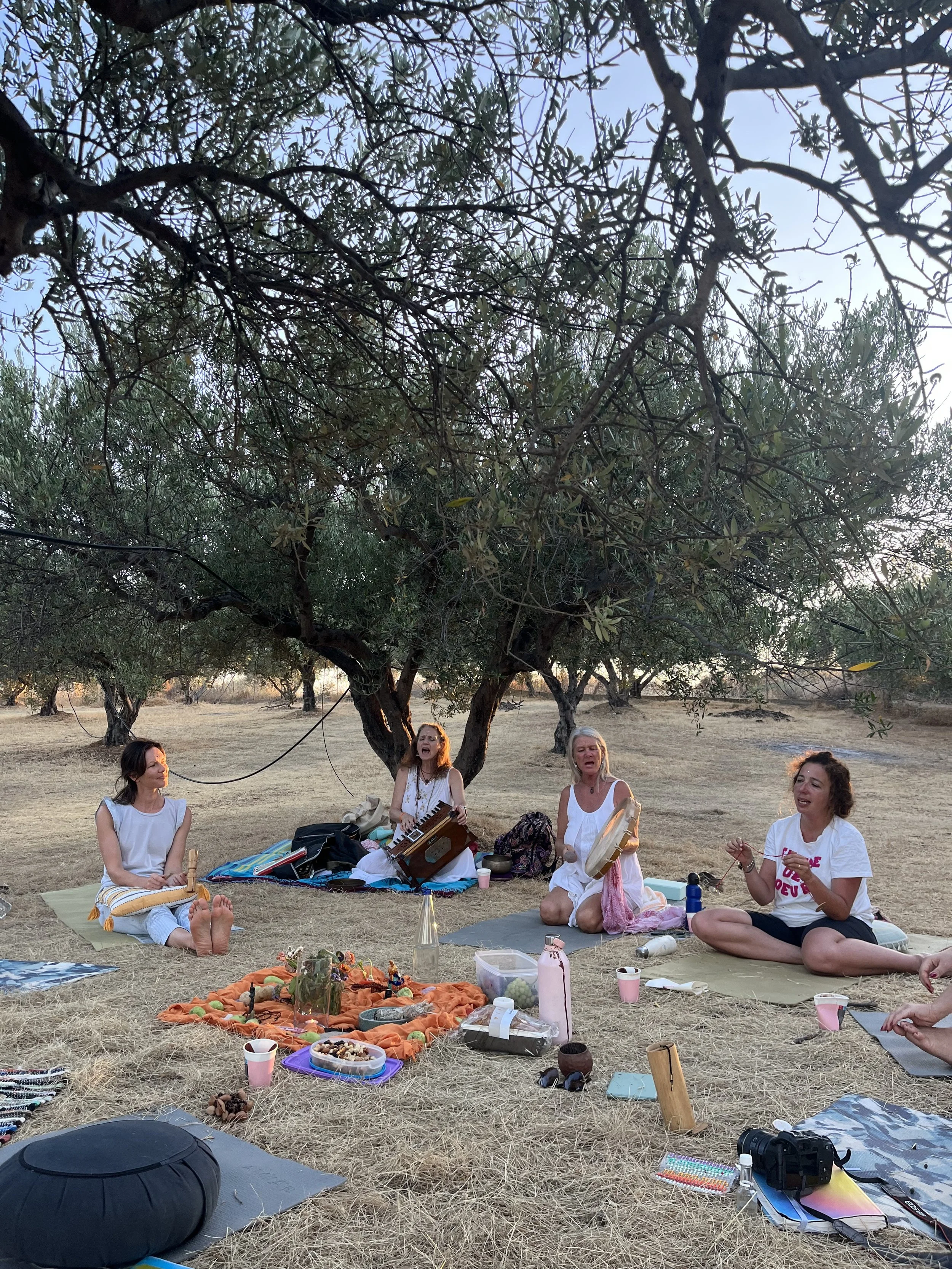
The foundation of this work has come through years of working with women, observing, listening and attending to their needs and issues through yoga classes, shiatsu treatments, retreats and women’s circles I lead each month over the past years.
The most prominent observation is a strong detachment from the body that results in physical issues, insecurities, lack of inner freedom and happiness. Instead of following the heart, we can find ourselves living by a certain programme to feel safer or to fit into society, attached to the past and traumas. It requires a lot of inner strength and trust within to live a life according to our soul nature, beyond all that holds us and being able to hear the communication of the body and her needs before it results in any type of stagnation, whether physical or mental.
Therefore, the Into the Trust series was born: paths towards developing a strong connection to trust in the body, in the present, in the inner voice; paths that serve as a foundation for leading a life of knowing, of being present, of patience and of moving in line with the journey, feeling supported by your own self.
Getting comfortable with being uncomfortable.
It is stepping out of our usual boundaries, restrictions and deeply held beliefs about how we do things and what we are or are not.
It is becoming aware of the protective walls we have built around ourselves and allowing ourselves to explore what exists beyond them.
It is about becoming aware of your no's, your limiting beliefs and your I can'ts, and allowing yourself to explore something more through the sense of trust in your body, your abilities, your different sides and your many layers.
This is where communication with your whole system starts.
You observe how you feel through each action. You become aware of yourself. You start knowing yourself more deeply. You solidify the connection, communication and trust within the different levels of your being.
My own journey with getting comfortable in being uncomfortable started many moons ago when I went on my first solo trip to India with my then yoga teacher from the Iyengar Yoga Institute of London, that aha moment of an out-of-the-known-body experience that I remember until today.
I followed my teacher, even though I was the person who couldn't even eat alone by myself. But that calling was much deeper than my fear.
A week with total strangers, learning to spend time on my own and not needing to fill up that silence. I then stayed alone for another 3 weeks going to my first Kirtan, ecstatic dance in the jungle, taking up kitesurfing, going into a pre-teaching yoga course. A month of saying yes to things and just observing how they landed in my body, discovering the many layers of myself, realising along the way that I’m most surely not what I think I am, and starting to hear that little voice within:
I want to teach yoga.
What happens when we stay inside what we already know?
Any energy that is not moving becomes stagnant.
There is nothing wrong with having roots and stability, although for me it is a totally internal understanding rather than external. People need safety, and for some, perhaps it works, or they might think it works because it satisfies them. Why bother?
But by seeing and working with enough women, I’d say that this is not always the case. They seek help. They know that something is missing. They are searching.
The concept of trying something new, for some reason, terrifies many. There is no internal trust, no ground or foundations, instead strong external attachments to how things should be, cultural expectations, what other people think, how it looks to others, etc.
In yoga philosophy, I’d refer to the eight limbs of yoga by Patanjali. I would address this path, how to implement it into everyday life or get in touch with it, through the third step, Tapas, of the second limb, the Niyamas — inner observances that help keep us on the path of positive behaviour within ourselves.
The Five Niyamas
Saucha — cleanliness or purification
Santosha — contentment
Tapas — discipline, austerity or the cultivation of inner heat
Svadhyaya — self-study
Ishvara pranidhana — surrender or devotion to something greater than ourselves
Tapas is often translated as discipline, austerity or self-discipline. Its Sanskrit root is connected with heat, burning, purification and transformation.
For me, this is where the connection with getting comfortable with being uncomfortable becomes very clear. Tapas is about meeting resistance rather than immediately moving away from it. It is the willingness to keep showing up, to stay committed to what supports us and to allow the practice itself to strengthen us.
By creating discipline towards our committed self, we start to build a stronger connection and trust within ourselves. We direct our gaze internally. We feel. We listen. And this, in return, supports us on the journey of stepping out of our shell, out of our can'ts and don'ts, and seeing what else life has for us.
Exploring more layers of ourselves, going beyond the feeling that something is missing and instead building a whole concept of:
I'm full.
I'm present.
And this can start happening in very ordinary daily actions: a different route, a conversation you would normally avoid, going somewhere alone, trying a new movement, saying yes when your automatic response would be no, or saying no when you realise you actually don't want to.
The practice is not becoming a person who is endlessly uncomfortable.
It is becoming a person who is willing to find out.
This is why I see trust as something we practise rather than something we either have or don't have.
You can also
Start by journalling your don'ts and can'ts during the day, especially observing them through the body's vibrations. Identify whether they come from a restricting mind that is trying to build a safe zone, or whether it is true body communication.
Make your disciplined practice whatever you have that you do every day, with an intention of building trust within, strengthening your walls and learning to listen and hear what is calling from within.
Trust the voice.
Get comfortable with being uncomfortable in whatever it calls you to follow, rather than staying in the familiar and continuing to seek for the answer elsewhere.